

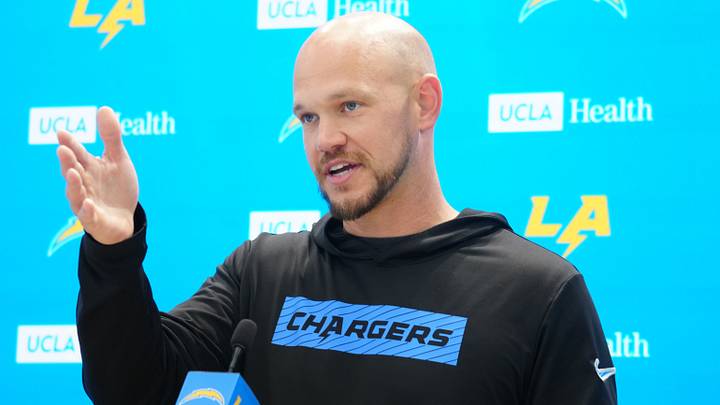
The Los Angeles Chargers haven't had much to look forward to this season on a game-to-game basis. After all, the pure inconsistency of the offense—along with all of the mistakes and miscues from seemingly every player along the unit—have made that side of the ball a tough watch for the team this year.
Justin Herbert, no matter where you want to attribute the blame, is playing the worst football of his career. None of the receivers are currently being maximized, and not even the Chargers' first-round pick from last season, Omarion Hampton, is seeing the usage that seems to befit a running back of his stature.
But the defense under first-time play caller Chris O'Leary has consistently been solid, and even with some dips (like the one we saw last week against the Houston Texans), this unit has a real chance to rank inside the NFL's top-10 by the time it's all said and done.
Now, the problems against Houston last week came in the secondary. Los Angeles got absolutely diced apart by C.J. Stroud and the Texans' receivers, allowing Stroud to complete 21 of his 35 passing attempts for 384 yards, five touchdowns, and one interception. But given what we've seen so far this season and the lack of departures at the trade deadline, it's reasonable to think that portion of the Chargers defense will be fine.
If the interior of the defensive line can continue to improve against the run and in the pass rush, then, O'Leary may very well have a top unit in his first year with Los Angeles.
Chargers defense has multiple areas for improvement—but the interior defensive line is the key to success
Let's get one disclaimer out there first—what O'Leary has done, considering the injuries and inconsistent play he's faced, has been absolutely incredible this season. Even with the monstrous passing game Los Angeles gave up to Houston, they're still eighth in the NFL in total passing yards allowed, and they've put up some impressive performances against quarterbacks like Josh Allen and Matthew Stafford over the course of this campaign.
But their performance against the run, outside of isolated performances against sub-par offenses, has been relatively underwhelming. They're 17th in the NFL in total rushing yards allowed to this point in the season, and they've allowed at least 4.8 yards per attempt to every contending offense (Buffalo, Los Angeles, Kansas City) they've played this season.
Now, part of this obviously falls upon the linebacker room. They're responsible for helping to fill gaps and clean up mistakes by the defensive line, and a lack of elite performance from Daiyan Henley coupled with the absence of Denzel Perryman has led to some variability in that room.
But when it comes down to it, Los Angeles has the bodies to dominate the run game at the line of scrimmage, they simply need to execute there. Although Dalvin Tomlinson has played just 186 total snaps on the season, he's been a solid gap-filler, and both Jamaree Caldwell and Justin Eboigbe are soldi run stoppers as well. Nick Barrett, who's quietly been a solid tackler against the run over the first half of his rookie year, could be a factor there as well.
As O'Leary figures out more of the right alignments and combinations on the interior, we should see the results there start to improve. Considering how easily they got moved by the Texans' offensive line in their last matchup, it's hard to imagine there's not some improvement there before the end of the season.
Now, when a team is trying to run out the clock in a resounding victory over the Chargers offense, it's difficult to ask this room to go out there and face the opponents' run game on a down-to-down basis without any drop-off in intensity. That's understandable.
But the onus upon this defensive interior also applies to the pass rush. In general, O'Leary has done a solid job figuring out how to play Akheem Mesidor, Tuli Tuipulotu, and Khalil Mack off of each other, and although the sack production isn't there this year relative to where it was under Minter, it seems like each of those pieces are making an impact over the course of each game.
All three of the Chargers' main interior pass rushers—Tart, Caldwell, and Eboigbe—have started to rebound since the bye week in terms of their pressure production, which is an excellent sign on that front. The trio has a combined eight pressures over the last two weeks working against relatively skilled interior offensive lines, and although it (again) hasn't resulted in sacks, that sort of constant pressure is what puts shakier offenses at risk.
Now, it didn't make a difference last week against Houston. But assuming the secondary is clicking like it was against the Rams, it may very well make a difference against a team like the Baltimore Ravens or the New York Jets. And that sort of rebound—ideally a complete shutdown of one of these two offenses over the next pair of games—will be what's required if O'Leary wants to work this unit into top-10 status in 2026.
 Add us as a preferred source on Google