

Now, the Los Angeles Chargers weren't technically inactive at the deadline.
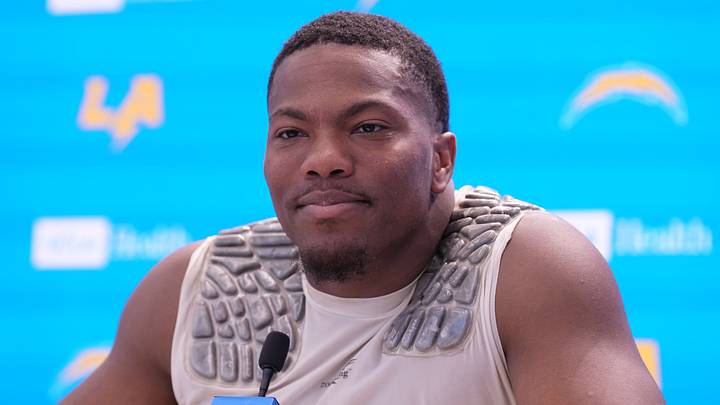
After weeks of publicly projecting a sort of "stand pat" message from the front office, at least when it came to hearing trade calls on the team's stars, the Chargers ultimately pulled the trigger on a move just over an hour before the deadline, sending linebacker Daiyan Henley to the Denver Broncos in exchange for a 2027 fourth-round and a 2028 fifth-round selection.
As much as it might have sent mixed messages to the team as a whole—as the front office remained adamant that it didn't want to trade off any of its leaders in a season that's already gone down the drain—it was a solid move. Henley likely wasn't going to re-sign with Los Angeles this offseason, and retrieving that type of draft capital for an expiring off-ball linebacker who hasn't played in top form since 2024 was a justifiable decision.
But late last night, it was announced that Denver had backed out of the Henley trade. The reason remains unclear—if it's a failed physical, we'll find out via the NFL's transaction wire at some point today.
Obviously that's not something Joe Hortiz could've anticipated. But it does change the entire complexion of the Chargers' trade deadline.
In a season where the team is 0-8 and has already lost its hopes of playoff contention, this front office came away without a single additional draft pick at the trade deadline. No matter how that result came about, that's a massive organizational failure.
The Chargers couldn't even pull off a minor sell at the deadline—and Daiyan Henley is likely gone anyways
Now, it's one thing to be resistant to selling off the cornerstones of this team. The organization, obviously, shut down inquiries about Justin Herbert and Ladd McConkey, and it seems as though they remained hesitant to move Khalil Mack, possibly at the player's own request, until the buzzer rang. Joe Alt, Rashawn Slater, Omarion Hampton, and Derwin James Jr. were also among the pieces that likely were never going to be moved.
And it's also reasonable to be content with the team not moving expiring contracts like Dalvin Tomlinson, Donte Jackson, and Denzel Perryman, assuming they were able to pull off the Henley deal. At the very least, it meant that Los Angeles had some extra draft capital to attempt to restructure this roster this offseason, especially if they sensed they weren't going to be able to give Henley what he wanted in free agency.
Again, it remains unclear why Denver backed out of the trade. Henley has dealt with a shoulder injury over the past couple of weeks, so perhaps they felt uncomfortable taking on a rental linebacker wit an existing health issue for that level of draft capital.
But all of this could've been avoided in the first place by Hortiz seriously entertaining suitors well in advance of the deadline—like virtually every other seller did.
The Indianapolis Colts, which have two wins on the season, came away from the deadline with a third, a fourth, and a fifth-round selection. The Philadelphia Eagles, which also have two wins on the season, came away with a first and a second. Even the Atlanta Falcons, which have three wins, came away with a second, a fifth, and a sixth.
Perhaps it's fitting that the Chargers, which still have zero wins on the season, came away with nothing.
And if this team was far apart from Henley in negotiations on his next contract, it's almost certain to be even farther now. Henley is almost certainly going to want something close to the $15 million annual value that Devin Lloyd commanded on his recent deal, and Los Angeles still has to sort out the extension for Tuli Tuipulotu—not to mention pay raises for McConkey and Alt in 2028. Even if there's no bad blood as a result of the trade, why would Henley want to stay with an organization that clearly doesn't believe he's worth that sort of value?
Maybe Los Angeles gets a compensatory pick out of this for the 2028 Draft when Henley walks in free agency. Outside of that, this is a complete and total failure by the Los Angeles front office, and now the Chargers will enter the back half of the season with neither a competitive roster nor any extra draft capital to show for it.
 Add us as a preferred source on Google