

The Los Angeles Chargers have plenty of reason to be optimistic with Mike McDaniel dialing up the offense in 2026.
After two years of inconsistency and stagnancy under Greg Roman, the Chargers can now expect an innovative approach under McDaniel— one that will look to maximize Justin Herbert's abilities through timing throws and YAC opportunities for the receiving corps. If Keenan Allen is ultimately gone, it's reasonable to expect a sharp increase in target share for Ladd McConkey out of the slot. With Quentin Johnston now having secured his fifth-year option, there's also ample room for the third-year receiver to make a major impact as a deep-ball and intermediate threat.
Those two pass-catchers can only take the Chargers so far, though. Los Angeles needs a third receiver to step up, especially one who can make plays through contact and fight through the middle of the defense when needed.
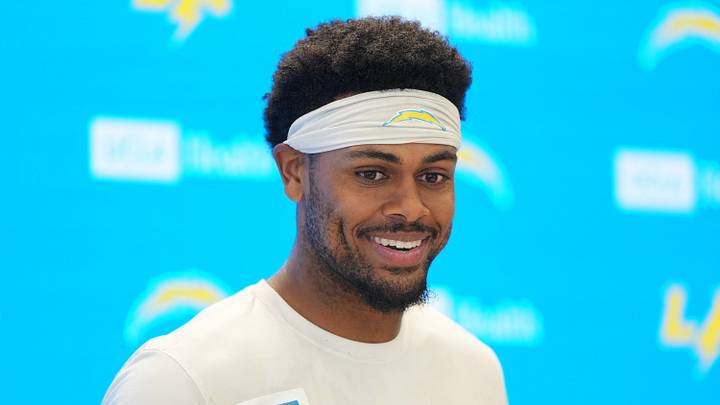
Right now, it seems like that will be Tre' Harris, the second-year receiver out of Ole Miss. If he can meet the expectations that have been set for him in 2026, he could quickly become the final piece to Los Angeles' offensive puzzle.
Tre' Harris has his work cut out for him in 2026, but expect a major year from the dynamic pass-catcher
When Harris entered the league as a second-round pick last season, he was seen as a potentially dynamic downfield threat with real potential to develop into a prototypical X-receiver in the right offense. Although his snap share increased over the course of his rookie season as a result of his blocking abilities, the opportunities for yardage simply weren't there for Harris in last season's offensive structure.
Even as Johnston's production waxed and waned, the emergence of Oronde Gadsden II and the continued focus on Allen within the passing game kept Harris's targets limited. Across 17 games, he caught just 30 passes for 325 yards and a touchdown.
It was a respectable showing for a rookie, but much more is expected out of him in 2026.
Throughout this offseason, the coaching staff has repeatedly referred to the three 'elite' receivers they believe are currently on the roster— McConkey, Johnston, and Harris.
McConkey should be the primary target in McDaniel's offense, given his ability to create separation on slant and hitch routes and his speedy elusiveness in the open field. Johnston should also get a number of those short and intermediate opportunities, but his real value will come as a deep-ball threat in McDaniel's scheme.
Harris, meanwhile, has the opportunity to play both roles. Although he wasn't necessarily used out of the slot during his time in college, he saw 37.3% of his snaps there as a rookie with Los Angeles. If he can unlock more of that role in 2026, picking up a significant target share both as an X-receiver and on timing routes out of the slot, he will be the type of piece that can unlock McDaniel's offense.
McDaniel's most successful offense with the Miami Dolphins, his 2023 squad, was much less egalitarian than the Chargers' projects to be in 2026. Tyreek Hill and Jaylen Waddle were the primary pass-catchers in that offense. But they were, at least partially, unlocked by the versatile presence of Cedrick Wilson Jr., who took 36.6% of his snaps out of the slot that season.
Harris doesn't need to be a 1,000-yard receiver in 2026, or even a 700-yard one. But if he can become a pass-catching threat that opposing defenses need to continually account for, he could be the piece that allows McDaniel to employ both McConkey and Johnston with the flexibility his offense requires.
If Harris can truly be an 'elite' receiver in 2026, therefore, he could quickly be the player that takes the Chargers offense to the next level.
 Add us as a preferred source on Google