

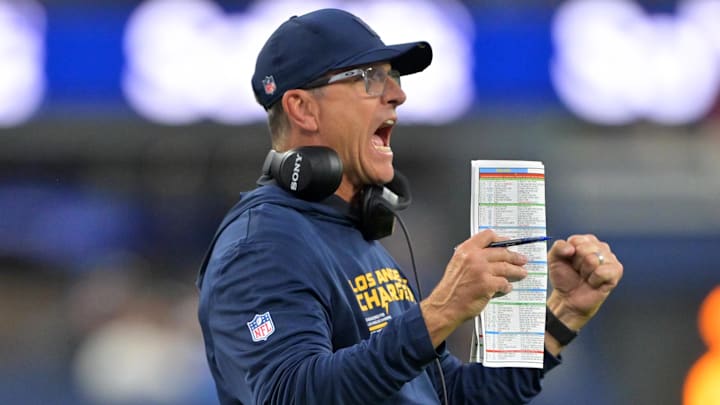
The dust has settled, and the Los Angeles Chargers have come away from the 2026 NFL Draft with quite the haul.
After beginning Day 1 with just five overall selections, a pair of trades with the New England Patriots and the Cleveland Browns, plus a trade up with the Houston Texans, netted them a total of seven picks— five of which fell on Day 3.
They addressed their two greatest needs with a pass rusher and a capable lineman in the first two rounds, before taking a series of players at other clear positions of need later in the Draft.
We won't have any certain answers on this draft class until at least mid-way through the 2026 season, but it's worth delivering some snap judgements on their selections in the meantime.
Grading every Chargers pick from the 2026 NFL Draft
Round 1, 22nd Overall: Akheem Mesidor, EDGE, University of Miami — A-
While trading back into the second round and attempting to grab one of the class's top offensive guards might have been the Chargers' best option here, it's a safe assumption to say the price wasn't right. Given what was on the board when Los Angeles selected, Mesidor was a worthy pick.
Detractors will point to his age (25) and the talent he played with at Miami as reasons to be down on Mesidor. But the fact of the matter is that the Chargers needed a premium pass-rusher after the departure of Odafe Oweh. They got one and then some in Mesidor.
In his final college season, Mesidor posted nine sacks and 55 pressures on 360 pass-rush snaps, per Pro Football Focus. He also has the versatility to line up inside when needed, meaning his impact alongside Tuli Tuipulotu and Khalil Mack can quickly be amplified by new defensive coordinator Chris O'Leary.
It wasn't the highest-upside pick from Day 1, but it's one that should make an immediate difference for the Los Angeles defense.
Round 2, 62nd Overall: Jake Slaughter, G/C, Florida — C+
This pick is a difficult one to grade— so much of its success depends on Slaughter's ability to step in at guard for the Chargers immediately upon his transition to the NFL.
But here's what we know now. Even taking into account their trade back with the New England Patriots, taking Slaughter in the second round was likely a reach. Multiple draft analysts had him tagged with a fourth-round grade, and it's likely that Los Angeles could have gotten him later if they were willing to wait.
If he's their guy, so be it. But his lack of snaps at guard in college (he played all of his snaps at center in his five years at Florida) leaves room for anxiety regarding a position change as a rookie. With Trevor Penning as their sole option at left guard beyond Slaughter, there's room for this pick to go horribly wrong.
At the same time, Slaughter has the fundamental soundness, if not the positional size, to quickly become a replacement-level protector. If the Chargers truly have the faith in Mike McDaniel's scheme that they've publicly projected, Slaughter might be all they need to cement a major turnaround for the offensive line.
Round 4, 105th Overall (via Cleveland): Brenen Thompson, WR, Mississippi State — A+
The fastest player in the Draft, Thompson' stock stayed steady in the fourth round despite the 4.26-second 40-yard-dash time he posted at the 2026 NFL Scouting Combine. In part because of his size and in part because of his route versatility, Thompson was firmly in the third tier of receivers in this class.
But the Chargers needed to add an additional pass-catcher, and they wasted no time on Day 3 in grabbing their guy. Thompson posted an SEC-leading 1,054 receiving yards on 57 receptions in his final season at Mississippi State, and he should be an appealing weapon to new offensive coordinator Mike McDaniel.
His upside as a kick and punt returner, however, is what could earn him significant snaps as a rookie.
Round 4, 117th Overall (via Houston): Travis Burke, OT, Memphis — B-
Joe Hortiz reiterated his belief in the depth of this tackle class for weeks before the Draft, and now the Chargers have found additional insurance behind Joe Alt and Rashawn Slater.
At 6'9" and 325 lbs, Burke is an imposing physical specimen, but his lack of consistent footwork and quickness off the line of scrimmage means there's significant work to be done to realize his upside as a run protector at the NFL Level. Per Pro Football Focus, Burke allowed 13 pressures on 429 pass-blocking snaps in his final season at Memphis.
Los Angeles traded up to grab him, so it's clear that he was likely on the board for multiple teams in the middle of the fourth round. It's a solid move, but unless Burke surpasses Trey Pipkins III for swing tackle duties, it's not one that will have an immediate impact.
Round 4, 131st Overall (via New England): Genesis Smith, S, Arizona — C+
Smith wasn't the Chargers' flashiest pick from the Draft, and he won't be the most popular either. He showed major upside as a roaming, 'center-fielder' free safety over his three seasons at Arizona, but there are major concerns about his tackling abilities and overall physicality that will follow him into the NFL. Per Pro Football Focus, he had a whopping 18 missed tackles in 2025
Because of that fact, he'll start his career firmly behind Elijah Molden and RJ Mickens on Los Angeles' depth chart. But he has an innate feel for open-field coverage that makes him worth taking a swing on.
Tackling (and physicality) is something that can be taught and instilled by a capable coaching staff. The Chargers have the defensive infrastructure to maximize Smith's abilities, and they could eventually turn him into a worthwhile Day 3 selection if he comes into the building with the right mindset.
For now, it's simply an upside swing at a position of eventual need.
Round 5, 145th Overall (via Cleveland): Nick Barrett, DT, South Carolina — B
The Chargers filled another clear need with their third selection of Day 3, taking a rugged, run-stopping interior defensive lineman in Barrett. Even after extending Teair Tart, it seemed reasonable for Los Angeles to look to add another body to this room.
Barrett won't provide much as a pass rusher (and he's not overly athletic), but he has the run-stopping acumen and the tackling ability to earn some rotational snaps. With free-agent addition Dalvin Tomlinson only under contract for 2026, the hope is likely that Barrett can develop into an insurance plan at nose tackle.
Given the run on defensive tackles that took place early in the fourth round, holding out and selecting Barrett here made sense. The Chargers left themselves with very few options at the position after filling more pressing needs earlier in the draft..
Round 6, 202nd overall (via New England): Logan Taylor, G, Boston College — B-
Taylor is a safe pick, but a bit of confusing one considering the resources the Chargers already devoted to the offensive line in this draft.
He has four years of starting experience at Boston College, and he has the fundamental traits to have a relatively high floor for a sixth-round pick. Per Pro Football Focus, he allowed 22 total pressures and five sacks across 538 pass-blocking snaps in 2025.
He'll have a real shot to make the roster as a rookie, but he'll need to compete with free-agent addition Kayode Awosika and last year's sixth-round pick Branson Taylor (not to mention the prospect we'll talk about next).
In a vacuum, Taylor should provide some much-needed depth behind Penning and Slaughter. Where it gets confusing is with their selection of Harkey at 206th overall.
Round 6, 206th Overall (via Cleveland): Alex Harkey, G, Oregon — B-
Harkey, like Taylor, is a fine piece on his own. He played each of his past two seasons as the starting right tackle for Texas State and Oregon, but he projects to kick inside at the next level. He has the athletic tools and the stature to be an adequate interior protector, and the right coaching staff should be able to develop him into a backup-caliber guard.
But it certainly seems as though one of these final two picks won't be on the roster by the time the season begins. Even if they are both able to beat out both Branson Taylor and Awosika for the backup jobs, Los Angeles would be left with two rookies (and Penning) as their replacements if Slaughter or Strange were to miss time.
They're not disappointing selections per se, but it was a confusing way to end the draft for the Chargers.
 Add us as a preferred source on Google