

The NFL trade deadline brought a lot of surprises with it, even for the Los Angeles Chargers.
Amidst a league-wide wave of deals, the Chargers sent Daiyan Henley to the Denver Broncos in exchange for a 2027 fourth-round and a 2028 fifth-round selection. As frustrating as it was, it was likely the right move. Should it have been their only move of the day? Probably not—but that's how things played out, and Los Angeles was able to recoup some pretty significant draft capital for a player it likely wasn't going to bring back this offseason anyways.
Of course, that wasn't the biggest deal of the deadline. The Jacksonville Jaguars acquired both Jessie Bates III and Jordan Davis for an absolute mound of draft capital. Josh Downs was moved to the Kansas City Chiefs, and Amani Hooker was dealt to the Buffalo Bills to address their dire needs in the secondary.
But perhaps the biggest trade, at least pertaining to the Chargers, was the deal that sent Kirk Cousins back to the Minnesota Vikings in exchange for a 2027 third-round pick.
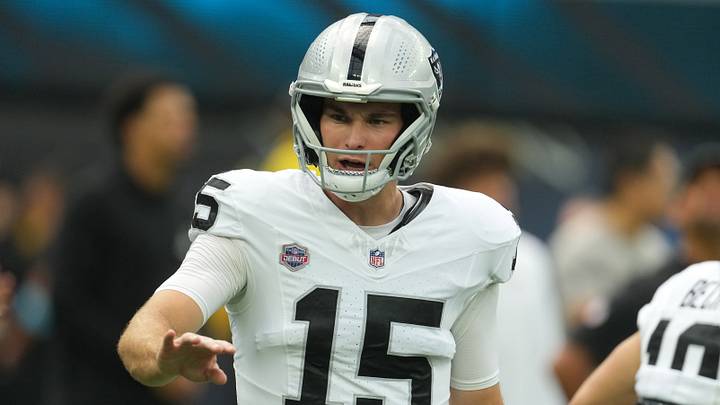
It wasn't necessarily a surprising move. The Raiders added Cousins as a starting option while first-overall pick Fernando Mendoza acclimated to the NFL, and capitalizing on his value with a desperate Vikings team was the best deal they could've made. As ironic as it is to see Cousins return to the team that let him walk out of the building in 2024, it was likely Minnesota's only option to capitalize on an absolutely elite defense this season.
But for the Chargers, it means that their first matchup with Mendoza is now set for Week 14, and it should be a preview of what's to come in the division over the next several years.
It was always going to happen—but Los Angeles is now going to need to start figuring out how to deal with Fernando Mendoza
In terms of Super Bowl contention and true relevance in the AFC West, Las Vegas is likely still a long way off. Both the Denver Broncos and the Kansas City Chiefs, despite the questions about their respective rosters, are still in pole position in the division for the foreseeable future, and the Chargers, with the right moves, should be able to work their way back into that mix in 2027.
But the Raiders are headed in the right direction, and as Los Angeles attempts an organizational reset this offseason, that's certainly not a good sign.
Las Vegas went 4-5 under Cousins' tenure with the organization—already earning more wins than they did through the entirety of last season. And things looked to be genuinely trending up on both sides of the ball. The offense under Klint Kubiak was second in the league in total passing yard, and although they were 31st in total rushing, the presence of Ashton Jeanty at least promised some upside there. The defensive side of the ball was still a major struggle, but their various offseason additions—including Nakobe Dean and Quay Walker—were at least paying dividends.
Now, a decent portion of this success can be attributed to Cousins. He was able to dice up the Chargers' secondary in their Week 2 matchup, and across his nine games in Las Vegas, he completed 64.1% of his passing attempts for 2,340 yards, 20 touchdowns, and eight interceptions. It was the best ball we've seen him play in a long time, and there's likely going to be an adjustment period before Mendoza is able to replicate that.
But Mendoza was always the future of the Raiders—Cousins was just a stopgap so that the organization didn't need to throw the rookie into the fire immediately. But if Kubiak can figure out how to keep Mendoza clean in the pocket, he could become more dangerous than Cousins rather quickly. He's a highly accurate quarterback, capable of hitting tight windows at almost any level of the field, and although he's not necessarily an improvisational playmaker, he has enough out-of-structure credentials to see upside for him long-term as a top-10 quarterback in the NFL.
The Chargers defense has improved greatly since that Week 2 matchup, and it's likely that Chris O'Leary will have some surprises in store for the Raiders when Week 14 rolls around. But no matter what, that game should represent an intriguing first glimpse at what the future of this division looks like, and if Mendoza immediately proves himself out of the gates, the path back to relevancy for Los Angeles will only become steeper.
 Add us as a preferred source on Google