

The Los Angeles Chargers, needless to say, need to come away with a win in Week 3 against the Buffalo Bills.
There's room to rebound from their pair of disappointing losses against the Arizona Cardinals and Las Vegas Raiders. But if they go 0-3 that hill becomes much, much steeper to climb. Only two teams have made the playoffs in the 21st century after starting the season with that record—the 2018 and 2025 Texans.
After the Bills matchup, the Chargers will face the Seattle Seahawks, the Denver Broncos, the Kansas City Chiefs, the Los Angeles Rams, the Houston Texans, and the Baltimore Ravens. Even without considering the historical context of an 0-3 record, the Chargers are dead in the water if they enter that stretch with the offense still looking the way it has through two weeks.
Of course, the failures of the offense so far have largely fallen upon the passing game. The Chargers haven't been able to get anything going outside of Ladd McConkey, and they've been limited by constant mistakes and breakdowns in protection in that portion of their offense.
But in Week 3 against Buffalo, it will be the run game with will determine the outcome. Los Angeles needs to truly get things going on the ground if they have any hope of resurrecting this offense, and that starts with Omarion Hampton.
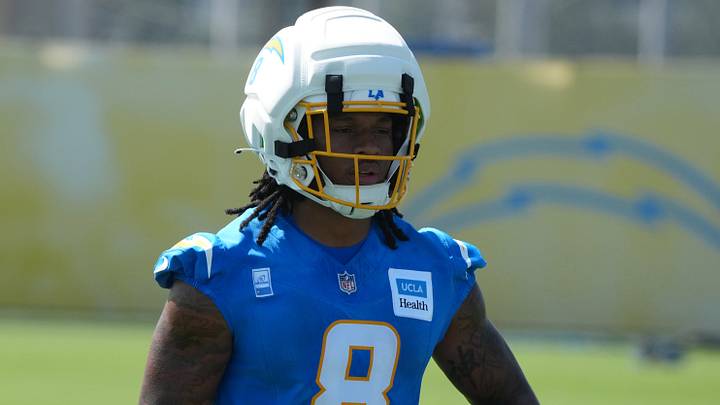
Omarion Hampton is the key piece to resurrect the Chargers offense against the Buffalo Bills
The blame for the way this offense has performed so far certainly doesn't fall upon Hampton. He's looked as explosive and as physical as the Chargers could've hoped when they selected him in the first round of the 2025 NFL Draft, and he looks like he has a real chance to unlock that star potential with a fully healthy season.
But the results have been middling so far. Through two weeks, Hampton has amassed 137 yards on 35 rushing attempts, posting a success rate of 51.4% and an averaged yards-per-carry of 3.9.
What it comes down to the is the interior of the offensive line. Mike McDaniel's outside-zone rushing scheme requires athletically and capable guards and tackles to create space and time for its primary rushers to either work between the tackles or turn the corner on the outside. We've seen improvement from pieces like Jake Slaughter and Kayode Awosika in that regard, but the run protection simply hasn't been good enough for Los Angeles.
That has led to adverse situations on passing downs, and a lack of schematic viability and separation there has killed drives time and time again for the Chargers. If they're able to lean on the run in Week 3, it could open up some more options in McDaniel's playbook.
The Bills' defensive line is also a major question mark here. Ed Oliver was a late scratch for their Week 2 matchup with the Detroit Lions after suffering hip spasms in warm-ups, and TJ Sanders seems to be nearing his season debut. But even with those two pieces out, Buffalo was able to limit Jahmyr Gibbs to 52 yards on 16 touches. David Montgomery put up 60 yards on 18 touches against that defense in Week 1.
This is not the weak Bills run defense we saw over the course of last season. Their secondary still has some major questions, but their defensive line has manage to bully both the Texans' and the Lion's offensive protectors in back-to-back weeks.
Hampton is going to need to defy the odds, then, is this Week 3 matchup. He's going to need to find gaps that are rapidly collapsing, and he's going to need to simply outgas Buffalo's physical defensive line and tackling LB corps.
His lack of pure production to this point in the season doesn't fall upon him—the blame lies at the feet of the entire offense. But if the Chargers are going to stand any chance of keeping up with Buffalo in Week 3, it's going to take a major, major outing from the second-year running back.
 Add us as a preferred source on Google