

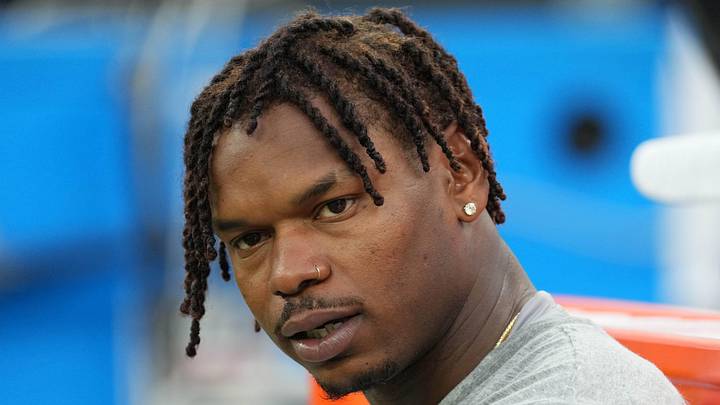
After concluding the majority of their offseason business, the Los Angeles Chargers still had two major objectives— extend both Derwin James and Tuli Tuipulotu.
Tuipulotu's extension could certainly come next offseason. After a monstrous campaign in 2025, the Chargers may be willing to gamble on a slight dip in production in 2026. But getting James locked up was clearly of the utmost priority for general manager Joe Hortiz.
On Tuesday, just after the start of OTAs, Los Angeles announced that it had signed James to a three-year, $75.6 million extension. It makes James the highest paid safety in the league (just like his 2022 extension did), and that figure is well-deserved. James is the cog that makes the machine of the Chargers defense work. His ability to play at all three levels and disrupt opposing offenses in both run and pass looks was invaluable under Jesse Minter's zone-heavy scheme. It will still be invaluable under Chris O'Leary's.
But there's another consideration here. As James enters his age-30 season, there's at least a conversation to be had about how long he can continue to perform at this level. It clearly wasn't a factor in his extension talks, but Los Angeles must truly consider investing heavily in their secondary in order to account for James' inevitable decline.
Derwin James will be the leader of the Chargers' defense for at least three more years, but they need to have a succession plan
James is absolutely still one of the league's star safeties. He rounded off his fourth Pro Bowl campaign in five seasons in 2025, and he was highly effective. He ranked fifth among all safeties in Pro Football Focus's coverage grade, and he also 13 total pressures and two sacks over the course of the season.
He hasn't yet shown any serious signs of decline. He'll likely still be in his prime for the duration of this contract, which should be reassuring to the Chargers.
But the fact of the matter is that this extension sets a three-year timeline for Los Angeles to start to build an off-ramp for James. As his athleticism declines, his duties will need to be lessened. When that happens, he could easily make a move to a more static role in the deeper parts of the field, returning on a year-to-year basis.
The whole machine, however, does not currently run without James' versatile skill-set. The Chargers don't currently have a true backup nickel on the roster, let alone an adequate replacement for James' services.
His extension, therefore, keeps Los Angeles' current defensive infrastructure in place for the next three seasons. Any discussion of James' decline is not one that needs to be undertaken with any immediacy.
But don't be surprised if, over the next two Drafts, the Chargers start to invest heavily in their secondary, especially as their current cornerback room starts to cycle out in free agency.
 Add us as a preferred source on Google