

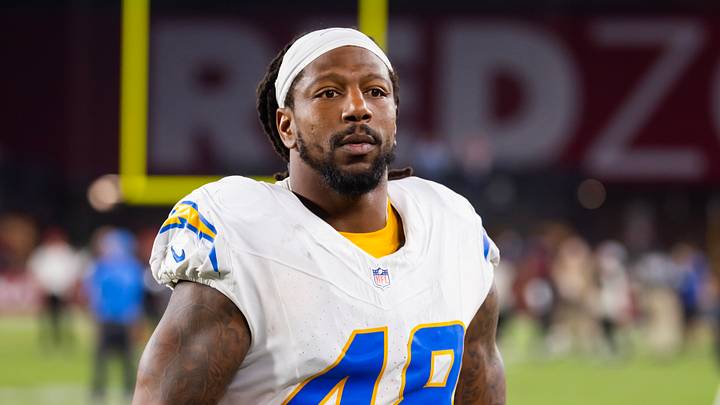
Heading into the regular season, the optimism surrounding the Los Angeles Chargers was sky-high.
There were obviously concerns about some regression on the defensive side of the ball under Chris O'Leary and some growing pains for the offense under Mike McDaniel. But nobody thought it would look like this. This team is dead in the water, and with an 0-4 record, it may very well be time to give up any hope of a playoff berth.
It's important, then, not to revisit the decisions the Chargers made in terms of their 53-man roster with an inflated benefit of hindsight. This team was constructed to be competitive, and the coaching staff made the decisions they felt like best benefitted that aim. It's why Junior Colson and Kyle Kennard were both left off the roster, and it's why Avery Smith is now with the Seattle Seahawks. The focus wasn't on the development on these young pieces, nor should it have been.
But that doesn't mean there isn't room to critique the decisions the Chargers did make, especially now that the season has gone off the rails. Notably, Los Angeles decided to keep Bud Dupree, who's now playing out his age-34 season, on the 53-man roster over younger edge rushers Kyle Kennard and Andre Carter II.
Dupree, though, has been almost a non-factor through four weeks of the season. Would Los Angeles not have been better off keeping a young, developing outside linebacker in that role?
The Chargers need to re-consider their Bud Dupree decision as the season goes off the rails
The Chargers, after what seemed like some real consideration during training camp, ultimately decided to give Dupree a secure spot as the team's fourth rotational edge rusher—primarily because of both his experience and his abilities as a run defender. Each of Kennard, Carter, and even UDFA Nadame Tucker obviously had their inconsistencies that warranted this choice.
Kennard has shown little to no productivity when he's taken the field, Carter doesn't necessarily have the pure athleticism to be a consistent pass rusher at the NFL level, and Tucker looked concerningly ineffective against the run during his preseason stint.
But Dupree, for his part, has seen his snap share cut in a relatively major way under O'Leary. He's now playing just 27% of the team's defensive snaps this season—compared to 50% and 41% in his two years under Jesse Minter. He amassed one pressure in each of Los Angeles' first two games, but he's now been blanked in back-to-back matchups against the Buffalo Bills and Seattle Seahawks. He also hasn't made a major impact against the run, totaling just two assisted tackles across his four appearances.
Could Los Angeles not have gotten the same role, and the same type of production, out of Kennard, Carter, or even Tucker?
Kennard was waived with an injury designation, and it seems like he certainly would've missed time at the start of the season if the Chargers had held onto him. But even though the start of his career was severely affected by his injuries, Los Angeles just spent a fourth-round pick on him in 2025—when he was coming off a major final season at South Carolina. He still needed to develop his presence off the edge and his strength coming off of the line, but there still seemed to be some real bend and athleticism there that could be unlocked.
The same idea applies to Carter, who amassed seven total pressures across the Chargers' three preseason games. There is likely some real upside to be unlocked there.
There's obviously not a major snap share to be taken on behind Tuli Tuipulotu, Khalil Mack, and Akheem Mesidor in O'Leary's defense, no matter if it's Dupree or someone else in that fourth OLB spot. Perhaps that role becomes much bigger if Mack is moved by the end of the season, and that should be a real consideration here.
But as things stand right now, would Los Angeles be better off letting Dupree walk (or simply move into a special-teams role), while one of their remaining young edge rushers takes over that share of snaps? At the very least, Dupree's performance so far this season hasn't justified letting go of the draft capital they had already invested in Kennard.
 Add us as a preferred source on Google