

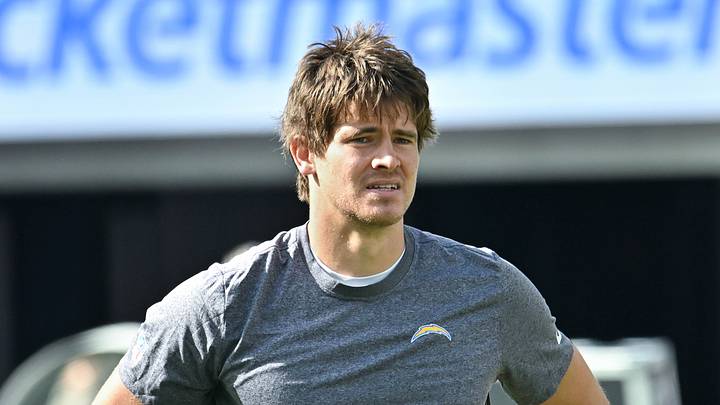
It's getting harder and harder to write these. The Los Angeles Chargers are now 0-4, and while there were some inspiring signs in the second half of this game against the Seattle Seahawks, things simply aren't good or consistent enough on offense to truly have hope yet that they can turn things around.
It will take a full dive into the film to diagnose everything that went wrong in this matchup. But from an immediate perspective, this game was absolutely full of mistakes, and it was the injuries to the offensive line, combined with an inconsistent performance from virtually all of Los Angeles' pass-catching threats, that ultimately did the team in.
Los Angeles will head into a pair of matchups with the Denver Broncos and the Kansas City Chiefs with an 0-4 record. Only one team in NFL history has ever made the postseason after an 0-4 start to the season—the 1992 San Diego Chargers.
Perhaps the name of that team provides some hope, but it's getting more and more difficult to see the light at the end of the tunnel.
Another offensive collapse for the Chargers keeps their first win out of reach (despite a promising second half)
1. Chargers defense is still the only true silver lining that 2026 has brought to the team
The Chargers did give up 30 points to the Seattle Seahawks, and there were some rough moments for Chris O'Leary's unit—especially against the run. They ultimately ceded 138 rushing yards on the day while Seattle was down their two primary backs in Zach Charbonnet and Jadarian Price. Charbonnet has yet to play this season after suffering a torn ACL in last year's playoffs, and Price was placed on the injured reserve ahead of this matchup with a chest injury.
But on the whole, O'Leary had a solid play-calling game. Even without his star in Derwin James Jr. (and Donte Jackson for much of the game), he was able to largely limit the Seahawks' passing game, and he was able to consistently put together pressure that kept Sam Darnold on his toes. The short offensive drives and turnovers ultimately proved to be too much for this defense, though, and the injuries that keep piling up leave some serious questions about this unit's viability moving forward.
2. Chargers' O-line depth is at its absolute limit as the team heads to 0-4
This is likely the most frightening part of this loss. The Chargers were already down Kayode Awosika and Trey Pipkins III heading into this matchup, and before the game was over, they ultimately lost Trevor Penning, Joe Alt, and Rashawn Slater. Ultimately, they were forced to move Jake Slaughter over to left guard, slotting in UDFA Jacob Spomer at center, Travis Burke at right tackle, and rookie Logan Taylor at left tackle. By the end of the matchup, they had no more healthy linemen dressed on the bench.
It was Taylor who let up the strip sack that ended the game for the Chargers. While we obviously don't know yet what the extent of any of these injuries will be, these are some potentially brutal blows in an already spiraling ceiling.
3. Justin Herbert showed some inspiring signs towards the end of the game—maybe hero ball really is his calling?
Herbert didn't have a perfect game. His two throws in the first half that turned into interceptions were absolutely ill-advised, and the disconnect between him and the scheme is becoming more and more obvious with each passing game.
But when things got down to the wire and Herbert was forced to fight for his life against near-constant pressure from the Seattle defensive front, we actually saw a glimpse of the star quarterback we know. He was scrambling, taking hits, and hitting deep downfield shots on the run. It's an inspiring glimpse of play from a QB that's looked downtrodden and defeated all season. Even with the loss, hopefully the Chargers can relay that momentum into something next week against Denver.
4. The distribution in this run game is still somewhat perplexing
The distribution of touches in the Chargers' backfield is something they've been sorting out all season, and it hasn't helped that the run game has been essentially dead in the water since Week 1.
Omarion Hampton finished the day with nine touches for 45 yards, while Keaton Mitchell went for 39 yards on 10 touches. Apart from the Chargers' last red zone possession of the day, it seemed like the ball went to Mitchell every time Hampton gained some momentum. This is something we'll break down more over the rest of the week, but for now I'll just leave this excellent observation from The Athletic's Noah Furtado.
Another questionable play call on third down.
— Noah Furtado (@bynoahfurtado) October 4, 2026
Also, for context: Hampton picked up six yards on first down despite being hit at LOS. Then the Chargers sub in Mitchell, who runs for no gain, and then keep Mitchell in on third down. What's with this RB rotation?
5. The drops are just too much for this offense to overcome—there needs to be more receiving talent on this team
Even with McConkey clearly limited in this game, there's no excuse for the way Los Angeles' pass catchers performed. There were notable drops, especially early in the game, that absolutely killed drives.
This has been an offense that's been defined by its mistakes and miscues to this point in the season, and while Herbert hasn't been perfect, he simply can't get anything going with this offense if his receivers aren't going to create opportunities for themselves—or, at the very least, capitalize when their opportunities are there. Harris looked promising in flashes in this game, but it's hard to see where this team gets the requisite pass-catching talent from to turn this offense around.
6. Chargers need to have an answer to the blitz, especially on third down
It's obviously hard to evaluate the Chargers' protection given the injuries they suffered in the later portions of the game. But assuming everyone returns to full health by next week, Los Angeles' main focus in that regard needs to be on picking up the blitz more consistently and finding answers when teams send extra rushers.
Seattle found consistent success, especially in the first half, sending the blitz on third down, and there were multiple drives for the Chargers that were tanked by this maneuver. This blocking scheme obviously has more imminent concerns at the moment, but let's keep things contained for now until we know the extent of the injuries.
7. Derius Davis' spot on this roster needs to be in serious question (if an alternative presents itself)
The Chargers, frankly, don't have a choice of cutting Derius Davis right now. Even if McConkey isn't forced to miss any time with his foot injury, they're already down to practice-squad pickup Marques Valdez-Scantling as their WR5. With Brenen Thompson still nursing his quadriceps injury, there is no true WR6.
But that muffed punt during today's game was only the latest mishap in a disappointing start to the campaign for Davis. Entering the Week 4 matchup, the Chargers were 27th in the league in yards per kick return (which Davis has largely ceded to Mitchell and Vidal by this point in the season), and they'd only taken one punt return through three weeks. Davis had his first reception of the season today, but there isn't room on a fully healthy roster for a player with a net negative special teams impact and no offensive role.
We'll simply need to see if the Chargers even have that level of roster flexibility at any point this season.
8. Tre' Harris continues to emerge as a real weapon for this offense (whatever that looks like)
Time for a quick positive note to end this round-up. Harris posted three receptions for 60 yards in this matchup, and he's now had genuine explosive plays in each of the last three weeks.
If this offense is going to turn things around, they're going to need to identify a true secondary pass-catching weapon alongside McConkey and their star receiver is going to need to get back to full strength. If Harris can continue to standout as a downfield threat and integrate himself more fully into McDaniel's scheme, there could be some promise there.
 Add us as a preferred source on Google